Recipes › Main course › Liguria
Automatically translated from Italian · Show original
Genoese-style Cima
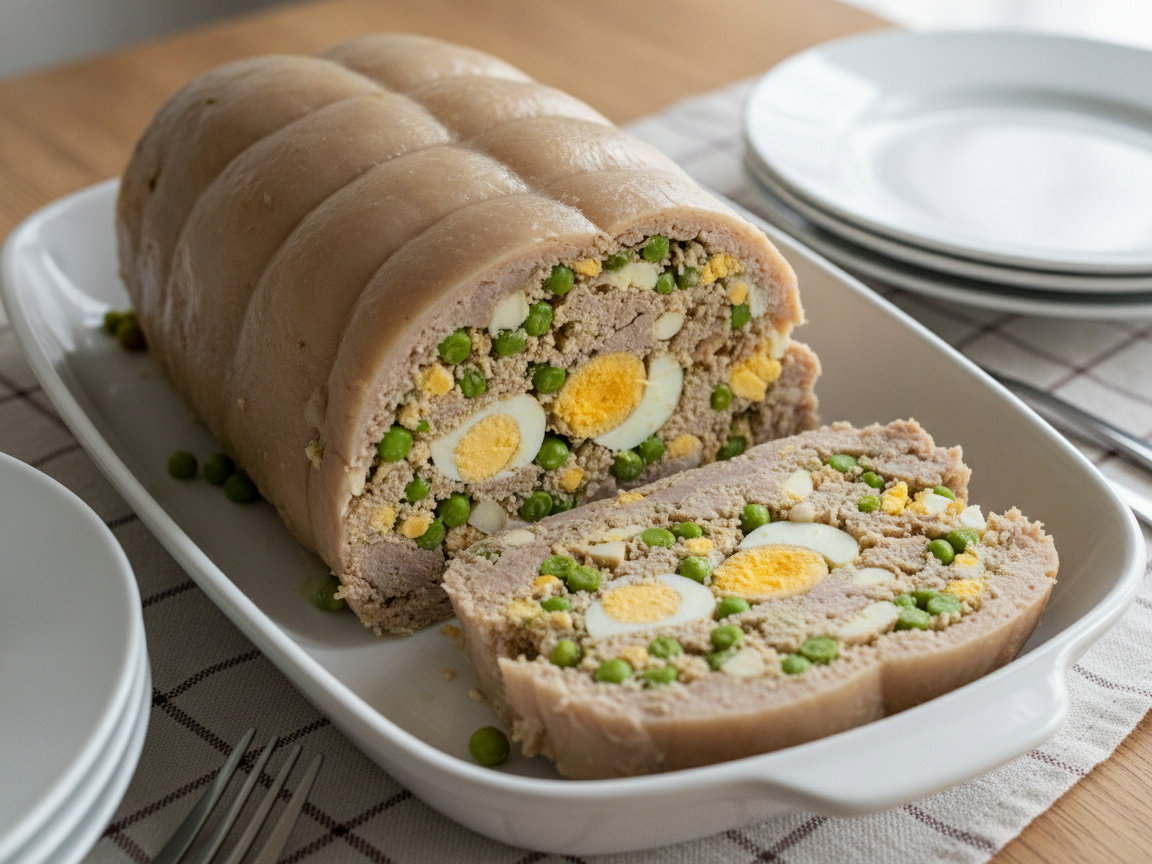
Veal breast pocket sewn and stuffed with eggs, peas, cheese, and marjoram, boiled and served cold in slices.
by Editorial team
- Servings
- 10
- Prep
- 1 h
- Cook
- 2 h 30 min
- Total (incl. cooling)
- 5 h 30 min
Tools: Piano cottura
Method
- 1In a large bowl, lightly beat 6 eggs with a pinch of salt. Add 300 g of minced lean veal, 80 g of crumbled breadcrumbs, 80 g of grated cheese, 150 g of peas, 20 g of pine nuts, and a teaspoon of marjoram, then mix well with a spoon until all the ingredients are evenly distributed.10 min
What it should look like: A soft, moist, and well-combined filling.
- 215 min
Careful: Never fill the pocket more than two-thirds full: the eggs will swell during cooking and the meat risks bursting, spilling the filling.
Take 1 kg of veal breast opened into a pocket and fill it with the prepared stuffing, filling no more than two-thirds of its volume. Carefully sew the opening with a large kitchen needle and kitchen twine using tight stitches, then prick the surface of the meat on both sides with a needle.What it should look like: The pocket is securely closed, not too tight, and pricked with holes.
- 32 h 30 min
Careful: The flame must remain at the minimum: a too vigorous boil will cause the pocket to burst.
In a large, spacious pot, pour 3 liters of cold water with 1 carrot, 1 peeled onion, 1 celery stalk, and a pinch of salt. Wrap the cima in a clean white kitchen towel, tying the ends with kitchen twine, immerse it in the pot, bring to a gentle boil, and cook over very low heat with the lid on for 150 minutes, keeping the water at a light simmer.What it should look like: The broth simmers gently without ever boiling vigorously; the meat feels tender to the touch.
- 410 min
Careful: Be careful of the steam and hot liquid that comes out when you drain the meat.
Gently drain the cima from the broth and carefully remove it from the towel. Place it on a cutting board or a tray with edges, cover it with a second cutting board, and place a weight on top (such as a heavy pot or some jars). Let it cool completely at room temperature under the weight.What it should look like: The cima compacts, taking on a regular shape and releasing excess liquid.
Cooling: 2 h
- 5Remove the sewing twine and slice the cold cima with a sharp knife into slices about half a centimeter thick, arranging them on a serving platter.5 min
What it should look like: Compact and clean slices with the typical mosaic of the filling clearly visible.